Cambridge Breakthrough: First Artificial Leaf Directly Produces Chemical Feedstock from Sunlight
Breaking the Deadlock: A Clever Marriage of Organic Semiconductors and Enzymes
Professor Reisner's team has long focused on "artificial leaf" technology, aiming to directly produce fuels and chemicals from sunlight and break free from dependence on fossil feedstocks. However, conventional approaches often face a dilemma: using synthetic catalysts may involve toxic metals and offer limited efficiency, while artificial leaves relying on inorganic semiconductors suffer from poor stability and narrow light absorption ranges.
The team's breakthrough lies in their novel combination, for the first time, of nature's wisdom—enzymes—with emerging organic semiconductor technology, successfully circumventing these obstacles.
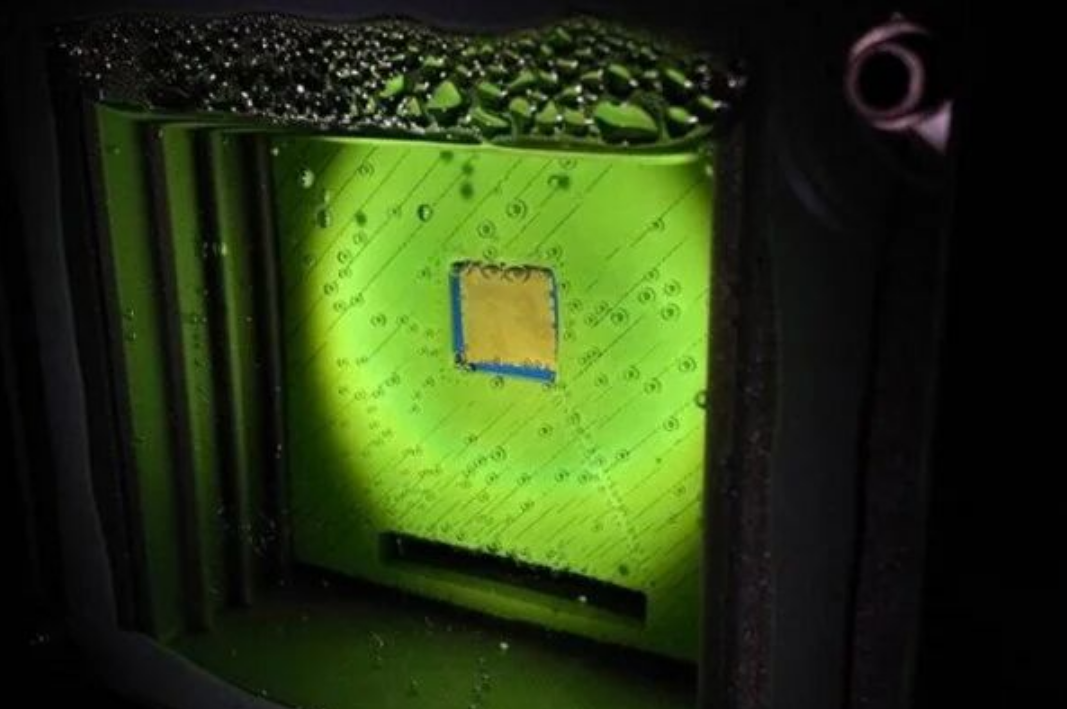
At the heart of this artificial leaf is an ingenious "sandwich" structure: the core light-absorbing layer is composed of an organic semiconductor material. Unlike traditional silicon- or lead-based materials, it is non-toxic and can be molecularly designed to utilize the solar spectrum more efficiently. The middle layer is a porous titanium dioxide scaffold, resembling a microscopic "honeycomb" that provides an ideal lodging for the enzyme catalysts.
The key catalysts are two highly efficient biological enzymes: one converts water into hydrogen, and the other precisely reduces carbon dioxide to formate. These enzymes are masterpieces of natural evolution, enabling highly efficient and specific reactions under mild conditions.
The research team also introduced a clever design—carbonic anhydrase. Its presence allows the system to operate stably in a simple and harmless sodium bicarbonate solution, much like soda water, skillfully maintaining a local pH balance and thus eliminating the need for expensive chemical additives that can easily interfere with the reaction.
Exceptional Performance: Seamless Transition from Lab Validation to Pharmaceutical Application
In laboratory tests, this artificial leaf demonstrated outstanding performance:
(1) It generated a starting voltage of up to 1 volt.
(2) It efficiently channeled electrons towards the synthesis of target products:
(3) The electron utilization efficiency for hydrogen production reached 99%; for formate production, it exceeded 87%.
In tests running continuously for over 24 hours, the device maintained good stability, with significantly improved lifespan compared to earlier designs.
But the researchers did not stop there. They further demonstrated how this solar-driven chemical synthesis could be coupled with the production of high-value products. In a proof-of-concept experiment, the formic acid solution produced by the artificial leaf was directly used to drive an asymmetric hydrogenation reaction. This successfully converted acetophenone into (R)-1-phenylethanol—a crucial chiral building block for the pharmaceutical industry—with reaction yields and enantioselectivity meeting industrial application standards.
Outlook: Challenges and Boundless Possibilities
Of course, challenges remain on the path towards a green chemical industry. For instance, the oxygen sensitivity of the enzymes means the device currently still requires operation in a controlled laboratory environment, and long-term stability needs further improvement.
Nevertheless, the researchers are optimistic about the future. They plan to extend device lifespan by optimizing enzyme immobilization techniques and protective layer materials, and to explore the feasibility of distributed solar-powered chemical plants in collaboration with industrial partners.
Looking ahead, this biohybrid platform offers rich possibilities. By swapping in different enzyme catalysts, the system could produce hydrogen for reductive amination reactions, or even generate syngas for other chemical processes. The tunability of the organic semiconductor also provides ample room for optimizing light absorption performance.
Sources:
[1]https://www.cell.com/joule/fulltext/S2542-4351(25)00346-0
[2]https://www.sciencedaily.com/releases/2025/11/251102011148.htm